Sludge Works
Sludge Works was an interesting design challenge. Our engineering resources were a bit low, but we needed to prototype some new level mechanics. The starting point was evaluating what sorts of mechanics I could do by myself with limited engineering support. The first thought was elevators: we already had a timeline system in the Viper engine that made the elevators and moving objects in Concussion Yard function. However, we didn't want to just do elevators again, so we needed to give it a different spin. A brief brainstorming session came up with the idea of a rising tide of Solid Sludge that would slowly lift the player up as the match proceeded, changing the map layout over time and making areas more or less hazardous depending on the rise/fall of the Sludge.
I first prototyped this in a dupped version of Backalley Brawl, using a very simple flat piece of geometry and the timeline tool to make it rise to a set height then fall back to it's original starting point. After that proved interesting, I then started building a new level layout to fit the mechanic into. As with Galaxy Burger and Knockout Roundabout, a circular level layout seemed perfect to capture the idea of a massive pipe funneling Sludge into the sewers, but creating the actual geometry to match it was quite tricky and required some adjustments to match curved architecture.
Each area in the map was designed to respond differently to the rising Sludge. Interior spaces become crowded when the sludge rises, while tall heights lose a lot of their advantage as the sludge gets closer to them. The most exciting and intersting part of the mechanic is when the sludge drops, as suddenly safe areas become dangerous and players standing in different locations now have to adjust to the rapid shift.
Overall, this is the level I'm most proud of in Knockout City. It has a very unique visual identity compared to most maps in action games, it has a very memorable and visceral level mechanic, and the environment art team (Cory Hamilton, Brennan Howell, Cassandra Sammartano, and Steve Bucholz) captured the narrative idea that we all worked together to brainstorm.
Thanks to Brennan and the Media team at Velan for capturing these images.
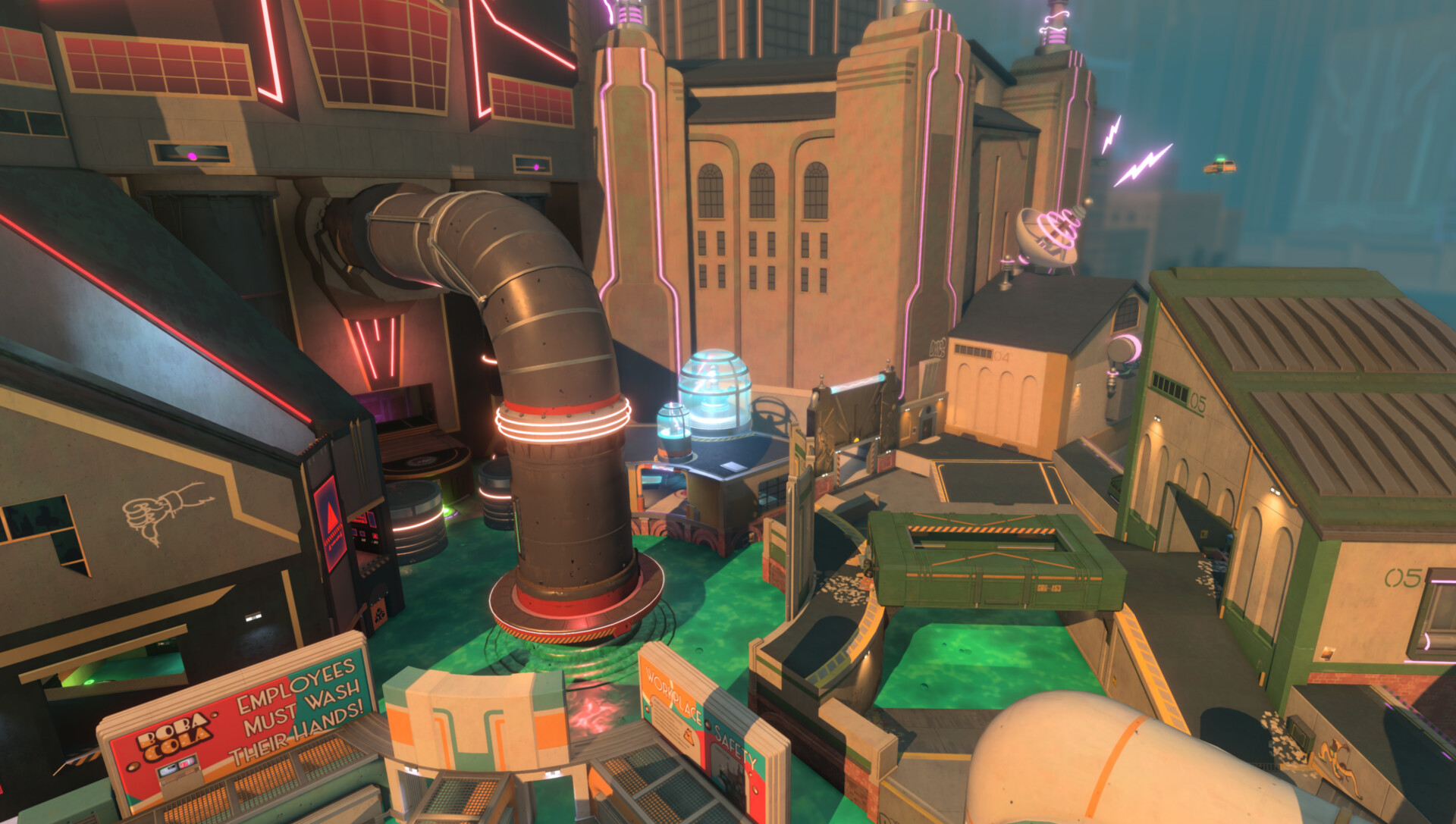
Sludge Overview

Pipes

Pit

Soda

Trash

Purple
